Brain Plasticity, or neuroplasticity, is the brain's ability to continuously change. The brain continues to create new connections, rewiring, adapting and repairing itself in a multitude of situations.
Disciplines, or concentrations in Brain Plasticity include:
- Aging
- Cognitive Neuroscience
- Development
- Learning and memory
Faculty working in Brain Plasticity

Jont Allen
Professor, Electrical and Computer Engineering

Benjamin D Auerbach
Assistant Professor, Molecular and Integrative Physiology

Catherine Christian-Hinman
Professor, Molecular and Integrative Physiology
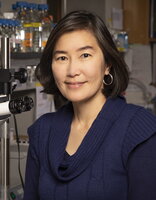
Hee Jung Chung
Professor, Molecular and Integrative Physiology

Jason Robert Climer
Assistant Professor, Molecular and Integrative Physiology

Martha Gillette
Neuroscience Program Director

Howard J Gritton
Assistant Professor, Comparative Biosciences

Joshua M Gulley
Professor, Psychology

Kimberly Lorraine Page Long
Assistant Professor

Steve Maren
Director, Beckman Institute for Advanced Science and Technology

Brian Monson
Associate Professor, Speech and Hearing Science

Steven J Petruzzello
Professor Emeritus, KCH

Andrew Jonathan Steelman
Professor, Animal Sciences

Elizabeth A L Stine-Morrow
Professor Emerita

Brad Sutton
Professor

Jonathan Sweedler
Director, School of Chemical Sciences

Nien-Pei Tsai
Professor, Molecular and Integrative Physiology

Xinzhu Yu
Associate Professor at the Brown Foundation Institute of Molecular Medicine, UT Health

Boxuan Zhao
Assistant Professor, Cell and Developmental Biology
Related News
 Newsweek: What happens to our brains as we get older? Well, for the most part, they shrink—...
- With help from the Champaign Public Library, Beckman researchers led by Professor Liz Stine-Morrow demonstrated that regular, engaged leisure reading can...
- Beckman researchers Aron Barbey and Evan Anderson found that taking into account the features of the whole brain rather than focusing on individual regions or networks allows the...
 Stress in humans and animals is linked to shrinkage of the hippocampus. Regular practice of yoga can help enhance nerve connections in many of the same brain regions that benefit from aerobic...
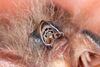 ANIMAL BIOLOGY - Audubon (New York City, Jan. 8) – Coming in many shapes, colors and sizes, strange mouth markings might aid in the survival of young birds, says Mark Hauber, an ornithologist and a...
Related Content
 Information about the Tsai Lab.
 Information about the Hinman Lab.
 Information about the Robinson Lab.
 Information about the Rhodes Laboratory.
 Information about the Inoue Laboratory.
 Information about the MFPRL.
 Information about the Chung Lab.
 Information about the Bell Lab.
 Learn about the Attention and Perception Lab.