floating brain

Exceptional opportunities

Neuroscience Graduate Program

The NSP at the University of Illinois at Urbana-Champaign is an interdisciplinary program of study and research leading to the doctoral degree.

We offer a rigorous yet flexible program designed to foster the growth of the student through research activities, close interactions with faculty, and exposure to top neuroscientists through our seminar series and attendance at professional meetings.

Neuroscience Program Events Calendar

Block Reference

Neuroscience News

Artificial Intelligence: Enabling More Sustainable Labs
ARTIFICIAL INTELLIGENCETechnology Networks (with audio; Suffolk, England, May 6) — Jimeng Sun, a computer science professor at the U. of I., used training data from over 8,000 past trials to predict the outcome of more than 3,400 recent drug studies in a prediction model. “All this...
The surprising scientific benefits behind memory manipulation
Today we know that our brains re-write our memories each time we recall them, but what if we could control that process? We're exploring the science of memory manipulation, which could transform treatments for Alzheimer's, PTSD, and more. To answer our questions, KCBS Radio news anchor Steve Scott...
Researchers receive $2.7M NIH grant to investigate effects of phthalate exposure on neurodevelopment
...
Monitoring stress from the surface of the body 
"Today, my laboratory looks more like a scene from a sci-fi film than a psychology research space. Wires snake across tables, sensors lay carefully arranged on trays, and a bucket of ice water sits in the corner, quietly waiting its turn." Manuel Hernandez is an NSP faculty member and...
Can Doing Crosswords, Puzzles, and Other Games Really Help You Stay Sharp?
Engaging your brain can have benefits—but not all mental exercises are created equal.Can Brain Games Really Preserve Cognition?When it comes to your brain, there’s some truth to the saying “use it or lose it,” experts said. “Your brain is an organ, and if you’re not using all parts...
14 Million Honeybees Escape After a Truck Rolls Over in Washington State
From The New York Times: In the northwest corner of Washington State on Friday morning, the authorities issued a most unusual all-points bulletin, rather, an A.P.Bee.“250 million bees are now loose,” the Whatcom County Sheriff’s Department...
Block Reference
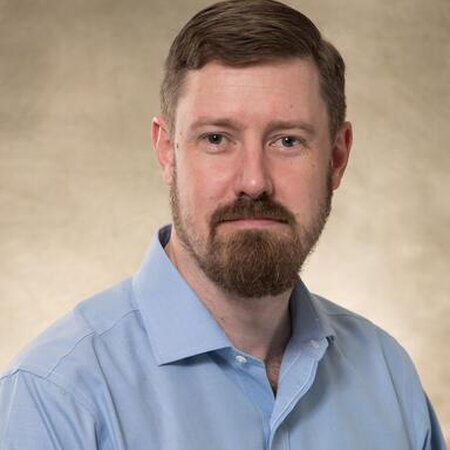
Monson headshot

Faculty Spotlight: Dr. Brian Monson, Assistant Professor

We welcome Brian B. Monson to the Neuroscience faculty.  Dr. Monson is an assistant professor of Speech and Hearing Science.  He received his Ph.D. in Speech, Language, and Hearing Science at the University of Arizona with minors in Neuroscience and Theatre Arts.  His Masters in Physics (Acoustics) is from Brigham Young University with a minor in Vocal Performance and his undergraduate degree in Electrical Engineering was received from Utah State University. 

Block Reference
Karla Melendez

Alumni Spotlight: Karla Melendez

What field in Neuroscience did you study?What about the research process did you enjoy? Did you prefer gathering the data, brainstorming its meaning, the writing process, defending your research, presenting your research, etc. I studied auditory neuroscience, specifically how little brown bats process communication signals. I preferred the writing process, defending and presenting my research vs. gathering and analyzing data. I felt that the latter was quite tedious, and it was much more exciting once I was able to share my findings. Did you choose to continue doing research? Why or why not...

Block Reference
Bull Frog

Recently Published: Are frog calls relatively difficult to locate by mammalian predators?

Abstract Frogs call in acoustically dense choruses to attract conspecific females. Their calls can potentially reveal their location to predators, many of which are mammals. However, frogs and mammals have very different acoustic receivers and mechanisms for determining sound source direction. We argue that frog calls may have been selected so that they are harder to locate with the direction-finding mechanisms of mammals. We focus on interaural time delay (ITD) estimation using delay-line coincidence detection (place code), and a binaural excitatory/inhibitory (E/I) ITD mechanism found in...

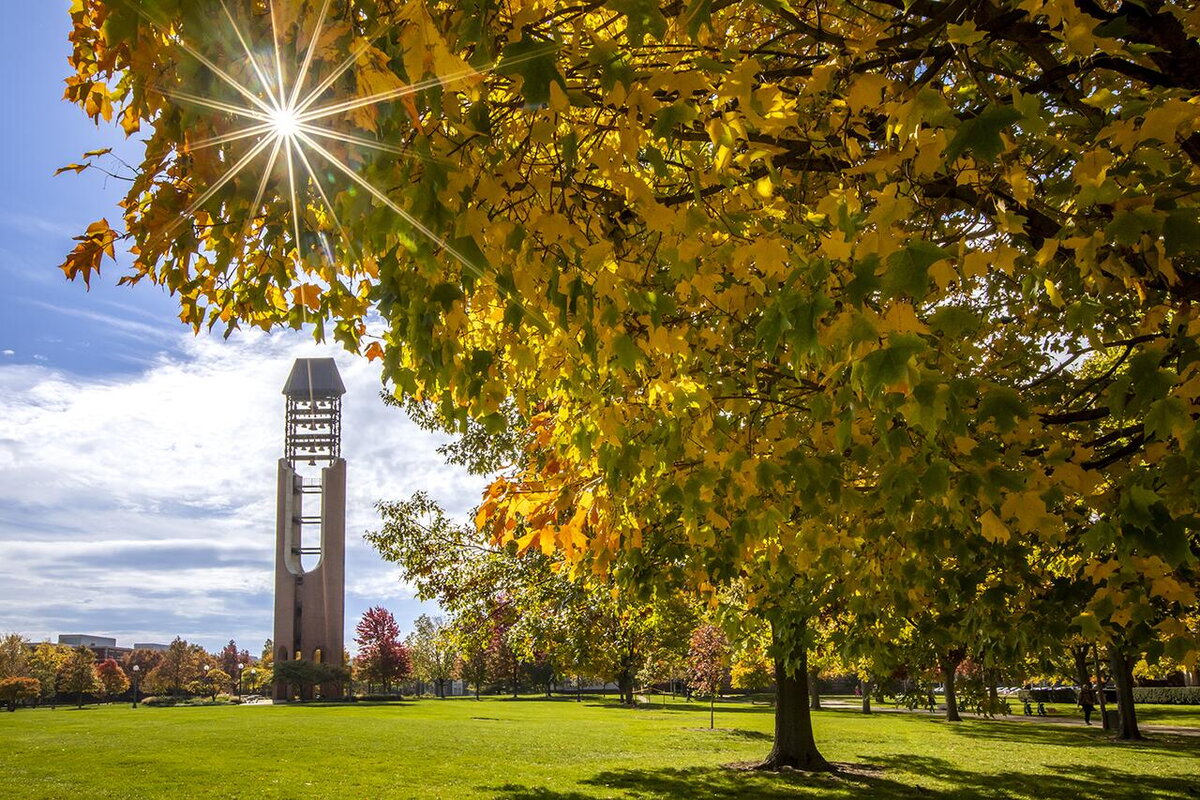
South Quad - McFarland Carillon Memorial Bell Tower

Land Acknowledgement

As a land-grant institution, the University of Illinois at Urbana-Champaign has a responsibility to acknowledge the historical context in which it exists. We are currently on the lands of the Peoria, Kaskaskia, Peankashaw, Wea, Miami, Mascoutin, Odawa, Sauk, Mesquaki, Kickapoo, Potawatomi, Ojibwe, and Chickasaw Nations. It is necessary for us to acknowledge these Native Nations and for us to work with them as we move forward as an institution with Native peoples at the core of our efforts.

More about the practice of land acknowledgements at the University of Illinois.